
1. GPUDirect Storage Requirements#
This section provides some basic background on where GDS can be most effectively used.
This information enables readers with varying degrees of technical acuity to get a general sense of whether, and to what degree, GDS can benefit file systems that make different design choices.
1.1. Summary of Basic Requirements#
The GDS architecture has the following key requirements:
The kernel storage driver can perform a DMA of user data to or from GPU memory by using addresses that were obtained from callbacks to the GDS kernel module,
nvidia-fs.ko.The device near the storage has a DMA engine that can reach the GPU memory buffer via PCIe.
For local storage, an NVMe device performs DMA.
For remote storage, a NIC device performs RDMA.
The file system stack that operates at the user-level, or the kernel-level, or both, and never needs to access the data in CPU system memory.
Instead, data is transferred directly between storage and GPU memory, which is achieved by file systems that exclusively use the O_DIRECT mode for a given file.
Figure 1 illustrates a way to visualize conditions for O_DIRECT. It covers cases where there is, or is
not, an operator ( ) in the data path to storage, and whether that operator is in the CPU or
GPU. If the operator is in the CPU, you cannot use O_DIRECT.
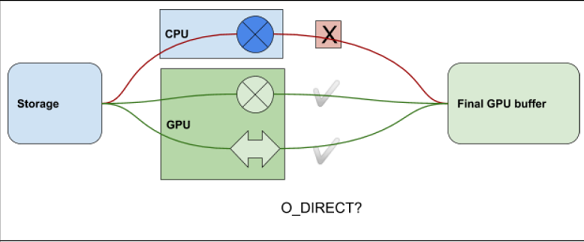
Figure 1.1 Summary of Basic Requirements#
The data coming from (or going to) storage cannot use O_DIRECT if it must be processed in the CPU, as symbolized by cross operator. It can use O_DIRECT if it only goes through the GPU whether there’s a transformational operator there as symbolized by a cross operator like checksum on the GPU or there’s no operation at all, as symbolized by a clean arrow.
Lack of support for RDMA in network file systems, or network block devices, implies the need to copy data to socket buffers in system memory. This need is incompatible with the basic requirements listed above.
If the conditions for using GDS do not hold, for example, because the mount for the file is not GDS enabled,
or the nvidia-fs.ko driver is not available, compatibility mode, a cuFile feature that falls back to copying
through a CPU bounce buffer, can be used. You can enable compatibility mode in the cufile.json file.
Users can override the system’s version of the cufile.json file by creating their own copy and pointing
the appropriate environment variable to that user’s copy. Outside of compatibility mode, the APIs will
fail if O_DIRECT is not possible.
Note
As of CUDA toolkit 12.2 (GDS version 1.7), the APIs would work in compatibility mode, even if the file descriptor that is used with the cuFile APIs is opened in non O_DIRECT mode. Even in such a case, the APIs would leverage the GDS path whenever a direct path between storage and gpu buffer exists. For all other cases the APIs go via the page cache for fds opened in non O_DIRECT mode. This can be viewed as the compatibility mode leveraging the page cache that can typically be used for smaller file I/Os with a high degree of temporal locality, like the case of application headers or metadata.
1.2. Client and Server#
In a local file or block system, a software stack performs all IO. In a distributed file or block system, at least two agents are involved. The client makes a read or write request, and a server services it. There are two types of file systems:
Block-based
Network-attached
A block-based system can be serviced locally or remotely, while network-attached file systems are always remote.
Consider the following interaction between a client and server:
The direct data path between the NIC and GPU memory happens on the client.
To enable this direct path, client-side drivers must first be enabled with GDS.
RDMA is a protocol to access remote data over a network and uses the NIC to DMA directly into client-side memory.
Without RDMA, there is no direct path, and GDS for distributed file and block systems relies on GPUDirect RDMA for the direct path between the NIC and GPU memory.
Using RDMA also relies on server-side support.
File system implementations that do not support RDMA on the server side will not support GDS. For example, NFS only works with server-side NFS instead of RDMA support, but this has become available from most NFS vendors since the inception of GDS.
1.3. Cases Where O_DIRECT is Not a Fit#
In POSIX, the mode in which files are opened is controlled by a set of flags. One of these flags, O_DIRECT, indicates a user’s intent to not buffer transfers in CPU system memory but to rather make transfers be more direct. O_DIRECT, for example, generally disables the use of a page cache. Although this flag is an expression of user intention, the implementation can still make its own trade-offs.
For example, the implementation might decide to treat small transfers differently from larger transfers that take a more direct path. In another example, a file system might offer an option for the user to enable read ahead for the page cache. This option, however, might conflict with the request from the user to use O_DIRECT for a file. In this case, how the implementation treats the competing requests depends on the implementation policy. Therefore, O_DIRECT can be considered a hint.
Several cases are listed below where a user’s request to use O_DIRECT is not currently supported in file systems, is not used in specific cases, or is fundamentally not feasible. The cases are delineated according to the agent that makes choices or trade-offs which impact that option.
Here is some additional information:
Possibly relevant for users
User-buffered IO: Transfers might be buffered in the user space before being transferred to the kernel.
This case might be used when many small transactions have good spatial and temporal locality.
Possibly relevant for middleware
Metadata management: There might be metadata with the data payload.
Metadata might take many forms, including checksums for the data payload, file sizes that must be updated when lengthening files, and maps of file layout when filling holes.
Hierarchical storage model: Some implementations used a tiered scheme where some data resides in CPU system memory, and where shorter latency and high bandwidth is possible.
There are outer tiers of progressively slower, but higher-capacity storage. An example of this tiered scheme is flash and then spinning disks.
Read ahead: An optimization that is sometimes used, especially for buffered IO and many small consecutive transfers, is to anticipate what will be used next and to buffer it in CPU system memory.
Examining or transforming data: When the CPU examines or transforms data before (or after) IO transactions, this process interferes with direct transfers between the storage and GPU memory.
File system only
Kernel-buffered IO: If there is good temporal and spatial locality, and the bandwidth and latency to copy from kernel memory is significantly better than copying from storage, a mechanism such as fscache might be used to maintain a copy in system memory.
Inline data: Small files are stored and managed differently than larger files.
Block allocation: Various policies are available to allocate space in files, and there might be implications for client- and server-side activities.
There are cases where middleware performs some of the same functions as a file system. Middleware might have more contextual information available to it than low-level calls to the file system, and it might take steps to increase the likelihood that the file system can use O_DIRECT. Consider the case of computing a checksum. A user might be able to control whether checksums are even used. If checksums are enabled, middleware might intervene in the following ways:
It could invoke a GPU kernel to compute the checksum and juxtapose the checksum data with the payload so that one cuFileWrite can be used to write back the data to storage.
It could again invoke a GPU kernel to compute the checksum to a different buffer and use two cuFileWrites to write each of the checksum and payload.
In these cases, the requests to the file system can use O_DIRECT.
1.3.1. Buffered IO#
The Linux virtual file system (VFS) uses a buffered IO when O_DIRECT is not specified, and there are potentially multiple layers of caching. Examples of caching might include the following:
Page caching, which is backed by fscache.
File-system-specific page pools, such as ZFS adaptive replay cache (ARC) and Spectrum Storage (GPFS) page pools.
1.3.2. Inline Files#
Filesystems that are based on Linux are implemented by using the common VFS interface to open, close, read, and write files. User data is organized in files, which are represented in the following ways:
Inodes, whose primary purpose is to store metadata.
Fixed blocks, which are generally referred to as pages that hold user content.
A typical block size is 4096 bytes.
Inline files have data that is smaller than a page size and small enough to fit in the inode. Generally, file systems provide flags to detect whether the inode is inline. Inodes are normally read into system memory, so inline user data is copied into system memory with the metadata.
In RDMA-based network-attached file systems, files that are smaller than the specified size threshold are sent inline in the remote procedure calls (RPCs). This process involves buffering in system memory, which requires an additional copy of user data rather than a direct data transfer. For some file systems, such as ext4 and Lustre, the inline files modes can be disabled at the file system level or on a per-inode basis.
1.3.3. Block Allocation For Writes#
Before data can be written to a file, a data block must be allocated. See Inline Files for more information. For file systems to support the O_DIRECT mode for writing files, free data blocks in storage must be available and ready to be used by the file system. Otherwise, as in the following cases, user data can be buffered into the system page cache, which makes direct data transfers impossible. Here is a list of cases where some file systems need to fall back to buffered mode because of block allocations:
Note
These limitations do not apply to distributed file systems if the features are implemented on the storage server, and the client does not perform buffering.
Extending writes: writes that are happening to increase the file size.
Allocating writes: writes to a block that has not yet been allocated.
Writes to preallocated blocks: the block was already allocated in storage, but the metadata needs to be updated before the data is written.
Hole filling: writes to a hole in the middle of the file, which was a sparse block.
Copy on write (COW) file systems: copy operations that are triggered when a write to a data buffer involves caching in the CPU system memory.
Delayed allocation or allocate on flush: allocation is reactive (not proactive) to reduce disk fragmentation on slow random writes or to large sequential writes for spinning disks.
For network-attached storage or distributed file systems, the file system architecture determines whether the allocation decision is made locally, on each client, or on the remote server. If the block allocation handling is done on the server side, there is no CPU buffering impediment to direct transfers. If block allocation was handled on the client side, there might be some impediments.
1.3.4. Examining or Transforming User Data#
Here is a list of some cases where the user data needs to be copied into system memory, so that it can be examined or transformed by the file systems as part of a read or write transfer:
Data journaling is used to track changes that are not yet committed to persistent storage.
Data journaling typically disables O_DIRECT. In general, the journaling of data is not required with the O_DIRECT use case, unless there is a high-speed journaling media. Metadata journaling does not require access to user data.
Checksums can be computed during writes and checked upon reads.
For network file systems with checksum support, the checksums are typically performed on the client to detect network corruptions, in addition to checksum computation on the server.
Client-side compression and deduplication can be provided on network clients to achieve bandwidth improvements in addition to compression on the server side for data storage.
Inline deduplication requires looking at user content to determine the fingerprint by using MD5 or SHA1 algorithms. Similarly, client-side encryption can provide more secure communication from the client to server.
Erasure encoding can be performed by the file system or the block device.
In such cases, the data is copied to CPU system memory before performing the DMA to the disk pool or network servers. For distributed block devices, the erasure coding decision is performed on the client side.
Synchronous replication involves a data copy into system memory before the DMA operation to a remote block device or server, depending on the recovery time objective.
1.3.5. Summary#
There are many cases in which the O_DIRECT mode, in which CPU system memory is entirely unused, is not a fit. The relevance of these cases depends on the local or distributed file system implementation, and in some cases, on the set of features that were selected by the user. Vendors can provide their own assessments of the relevance of these issues.