


Resources#
FAQs#
Where is the hardware bill of material (BOM)?
The complete qualified ATB BOM is located in the Procure the Hardware chapter of the Installation Guide.
Does the platform support MU-MIMO?
ATB does not offer MU-MIMO integrated interoperability; however, the same platform is capable of adding software features for MU-MIMO.
Which frequency bands does the platform support?
ATB offers a tested reference for n48 and n78 sub-6 frequency bands.
Which RF parameters may require additional tuning for specific environments beyond the default config?
pusch_TargetSNRx10, pucch_TargetSNRx10, ssPBCH_BlockPower, min_rxtxtime, TDD Patterns, RU Attenuations
How can I apply for an experimental license in United States?
Review the application located at https://apps2.fcc.gov/ELSExperiments/pages/login.htm. If you have a program experimental license (https://apps.fcc.gov/oetcf/els/index.cfm), you can also use it for the Innovation Zone areas (Boston and the PAWR platforms) by submitting a request on that website.
Where can I find utility RF tools and calculators?
Is GPS needed?
Yes, a GPS signal is necessary to drive precision timing for 5G networks. In case a GPS signal is inaccessible, the date command can be used as a workaround. This command is useful for those deployments where there is no timing reference (like GNSS) but needs Qg 2 to act as a GrandMaster (GM) to propagate time and synchronization over PTP to slave units.
When using two GMs, you can manually set the date and time on the first one and connect its 1PPS/ToD output to the 1PPS/ToD port (configured as input) of the second GM. The second GM then outputs PTP messages with a clock class=6.
Recommended Reading Material#
Programming Massively Parallel Processors by David B. Kirk and Wen-mei W. Hwu
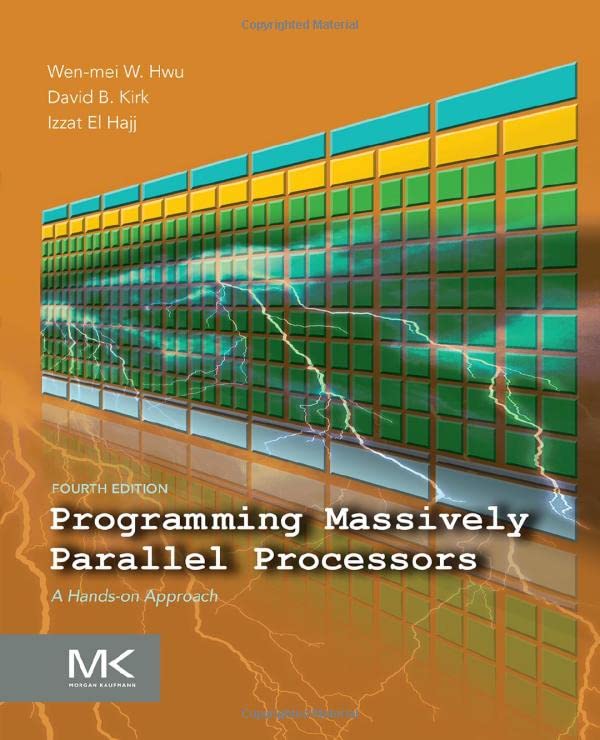
Hands-on CUDA-C#
To learn CUDA and learn teach it to others, refer to the NVIDIA/UIUC Accelerated Computing Teaching Kit, which outlines each module’s organization.
Additional Help#
Visit the GitHub Discussions forum
Contact us at aerial-info@nvidia.com