

Enterprise AI Factory inference hub Reference Design#
The AI Factory inference hub surfaces a Portal, a Gateway, and multiple model-serving backends as one governed system. Developers integrate once through stable APIs and model aliases; administrators govern ownership, entitlement, routing, cost, and backend eligibility behind that interface.
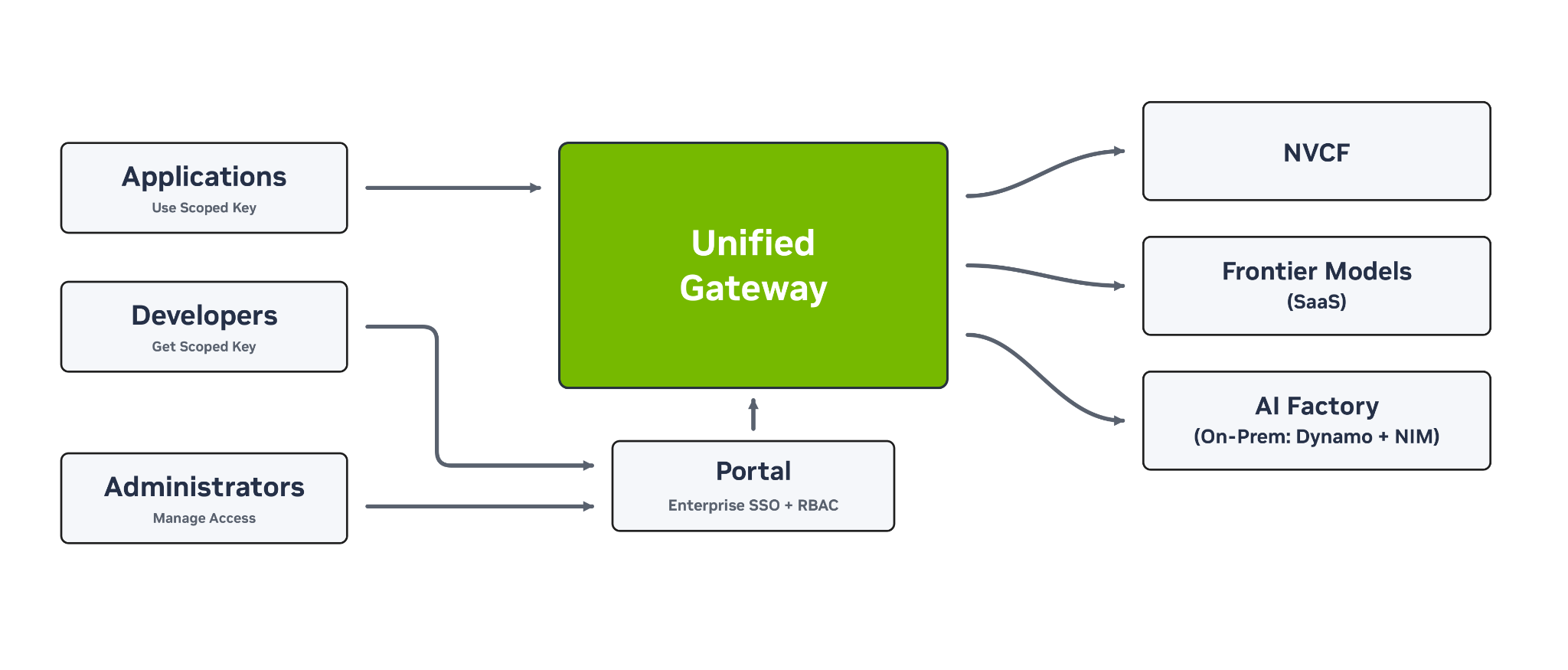
Figure 2 Enterprise AI Factory inference hub#
Portal#
The Portal defines the approved operational state for models, tenants, workloads, and access policies. It is not on the data path for each inference request; it establishes the catalog, ownership, entitlement, quota, and credential configuration that the Gateway enforces at runtime. In practice, the Portal concentrates the following control-plane functions:
Identity, access control, and RBAC: Inherits identity from enterprise ICAM through SSO, commonly OIDC or SAML. User, group, role, and organization context determine model visibility, access requests, credential creation, backend administration, and quota approval.
Model catalog, versions, and aliases: Maintains approved models, logical aliases, supported APIs, context limits, modality, version, capability tags, cost profile, data-policy eligibility, and backend availability.
Developer onboarding and integration: Provides API documentation, request and response schemas, authentication guidance, sample calls, SDK examples, and model-specific usage notes.
Workload registration and ownership: Captures owner, team, environment, data class, expected traffic, latency target, availability needs, and budget center.
Credentials, quotas, and limits: Issues scoped API keys or workload credentials tied to user, application, organization, model alias, and environment; supports revocation, rotation, default quotas, and budget limits.
Usage, audit, and cost visibility: Shows request volume, token usage, errors, latency, quota utilization, cost, access approvals, credentials issued, and policy applied.
Gateway#
The Gateway is the runtime control point for inference traffic. It exposes a consistent client interface, applies policy on each request, selects an eligible backend, mediates backend credentials, and emits operational evidence. The runtime path is defined by these controls:
Runtime policy enforcement: Validates credentials or workload identity, enforces RBAC, entitlement, quota, budget, rate limit, and data-policy rules before forwarding a request.
Unified client interface: Exposes consistent APIs and logical model identifiers while hiding provider endpoints, backend credentials, format differences, and error variation.
Inference-aware routing: Extends generic gateway behavior with placement decisions based on model intent, eligibility, health, saturation, latency, cost, geography, and data-handling rules.
Reliability controls: Uses bounded timeouts, limited retries, controlled failover, graceful rejection, and approved spillover without amplifying backend load.
Fair-share controls and telemetry: Uses dynamic rate limits during contention and emits traces, metrics, logs, and audit events through OTEL, W3C Trace Context, OpenMetrics/Prometheus, CloudEvents you, or SIEM/event schemas.
Inference Backend#
Inference backends execute model requests and determine the latency, throughput, reliability, and infrastructure efficiency experienced by applications and agents. This becomes more important as agents chain or parallelize calls across multiple models, where latency and reliability accumulate across the workflow.
The inference hub does not prescribe a common serving runtime. It standardizes how backends are registered, governed, routed to, and observed so self-hosted, cloud-managed, and provider-hosted services can operate behind stable model aliases. Backend selection should account for model capability, data-location policy, health, saturation, available capacity, cost, and workload latency or availability requirements.
Backend category |
Role in the inference hub |
|---|---|
Self-hosted |
Enterprise-controlled infrastructure for direct control over model deployment, optimization, data placement, and scaling. |
Cloud-managed |
Managed execution with enterprise governance hooks, capacity signals, and approved routing contracts. |
Fully managed or API-based |
Provider-operated inference service accessed through approved credentials, data rules, budget controls, and audit. |
Across all categories, the backend remains responsible for execution and scaling; the inference hub provides the common control and visibility needed to match demand to eligible capacity.