

NVIDIA Implementation Walkthrough#
NVIDIA inference hub Walkthrough#
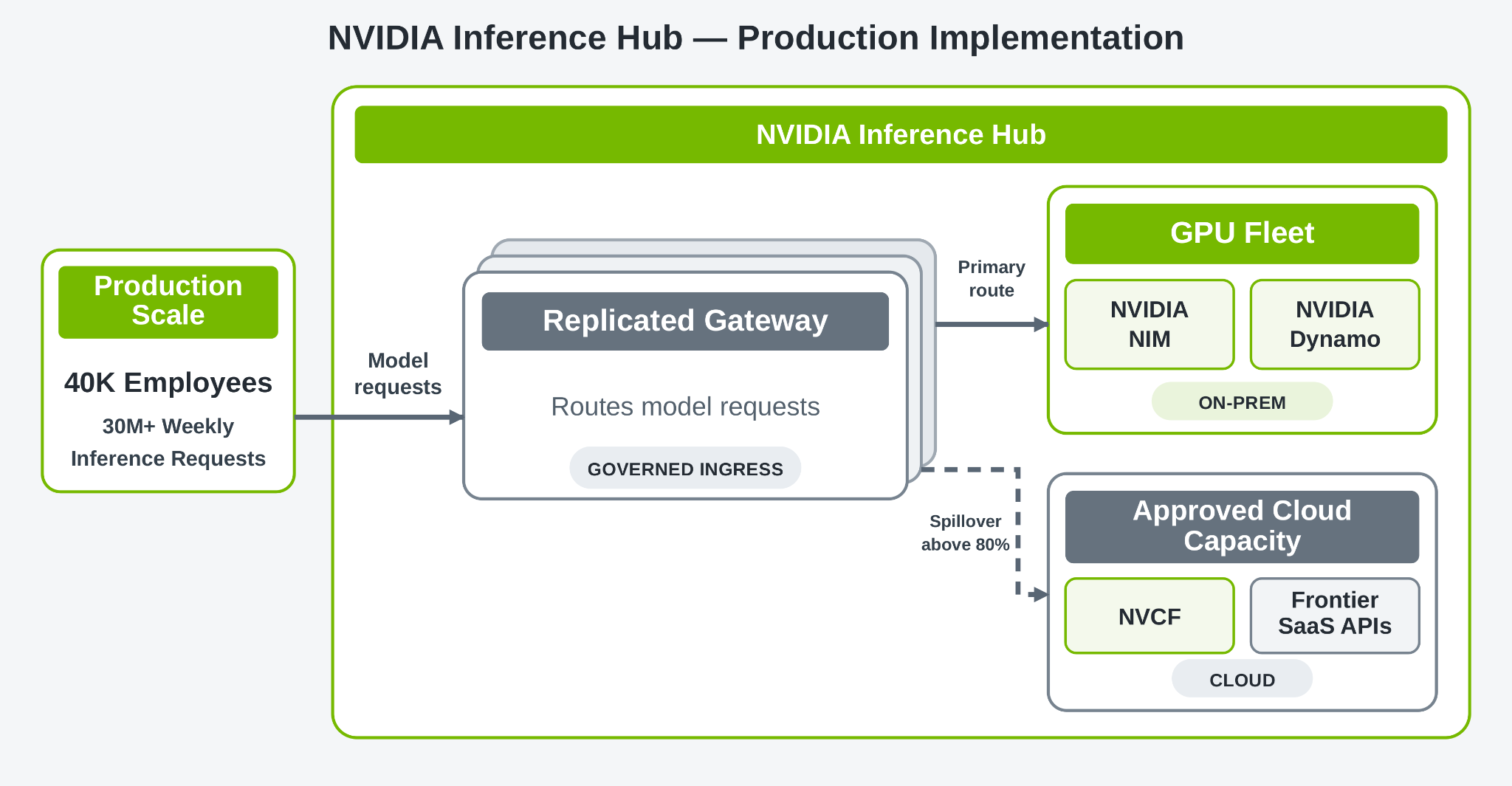
Figure 4 NVIDIA production implementation and hybrid routing.#
Function |
Implementation |
|---|---|
Gateway |
Replicated, self-hosted gateway with one API across inference services |
Credentials |
Encrypted relational store with rotation and audit |
Shared state |
Distributed rate-limit and usage state across gateway replicas |
Primary route |
Least-busy routing to on-prem GPU fleet using NVIDIA NIM and Dynamo |
Spillover |
NVIDIA Cloud Functions or approved frontier SaaS APIs above 80% on-prem utilization |
Tracing |
Per-request gateway and backend latency observability with route attribution |
This table describes functions deployed in the production topology.
Operating Lessons#
Ease drives adoption. Three platforms with separate credentials kept parallel integrations alive. Developers chose one API-compatible surface when it combined self-service credentials with under-five-minute onboarding. The unified path must be easier than bypass.
Cost visibility changes behavior. Real-time per-model token spending moved simple work away from expensive frontier capacity without a mandate. Attribution and show-back can improve usage before restrictive enforcement.
The gateway must be the only network path. Bypass traffic hid usage from governance, cost, and compliance. Network-level enforcement made audit and policy complete as adoption grew because it did not depend on developer convention.
Smart routing pays at volume. Sending suitable requests to smaller on-premises models reduced cost with negligible accuracy loss for most workloads. The complexity classifier added under 10 milliseconds per call, showing that modest routing overhead pays at scale.
Model sprawl can masquerade as a capacity shortage. NVIDIA found a cluster that looked fully allocated but ran at under 5% actual GPU utilization because models were statically bound to resources. Unified access and dynamic routing exposed and reused that stranded capacity, avoiding unnecessary hardware growth.