

Governed Inference for the Enterprise AI Factory#
In the age of AI, the most expensive mistake is leaving inference unmanaged. Runaway agents drive extreme usage. Models get stale. Inference stagnates on slow, outdated engines.
Enterprises are moving from isolated model experiments to production AI Factory environments. Applications, agents, and workflows now depend on frontier models, retrieval models, domain models, and specialized inference services across managed APIs, self-managed cloud services, and self-hosted infrastructure.
Without a common inference layer, each team solves access on its own. Applications embed endpoint URLs, copy credentials into local configuration, handle failures differently, and bind themselves to specific serving backends. This slows model migration, weakens policy enforcement, fragments usage data, and makes capacity planning harder.
The Enterprise AI Factory inference hub operates inference as a governed enterprise service. The Portal connects workloads to owners, approved models, entitlements, quotas, and budgets. The Gateway enforces access and routing policy at runtime. Backend services execute and scale inference across on-premises, cloud, and managed environments, allowing models, engines, policies, and infrastructure to evolve behind a stable API.
NVIDIA IT refined this pattern in its own internal AI Factory, supporting an enterprise of 40,000 employees and roughly 1B inference calls per week. At that scale, inference cannot be operated as a collection of individual endpoints. Sustainable operations require coordinated control across the Portal, Gateway, and backend fleet so platform teams can improve throughput, latency, utilization, and cost while developers retain consistent, self-service access to approved models.
The Fragmentation Problem#
Direct API integrations are tightly coupled deployments. Manually configured API credentials need manual updates to migrate. Policy and data-location controls drift, leaving audits unable to reconstruct usage or cost. Static allocation adds another blind spot because a fleet can look fully allocated while its GPUs do little work. Fragmentation weakens agility, security, economics, and throughput together.
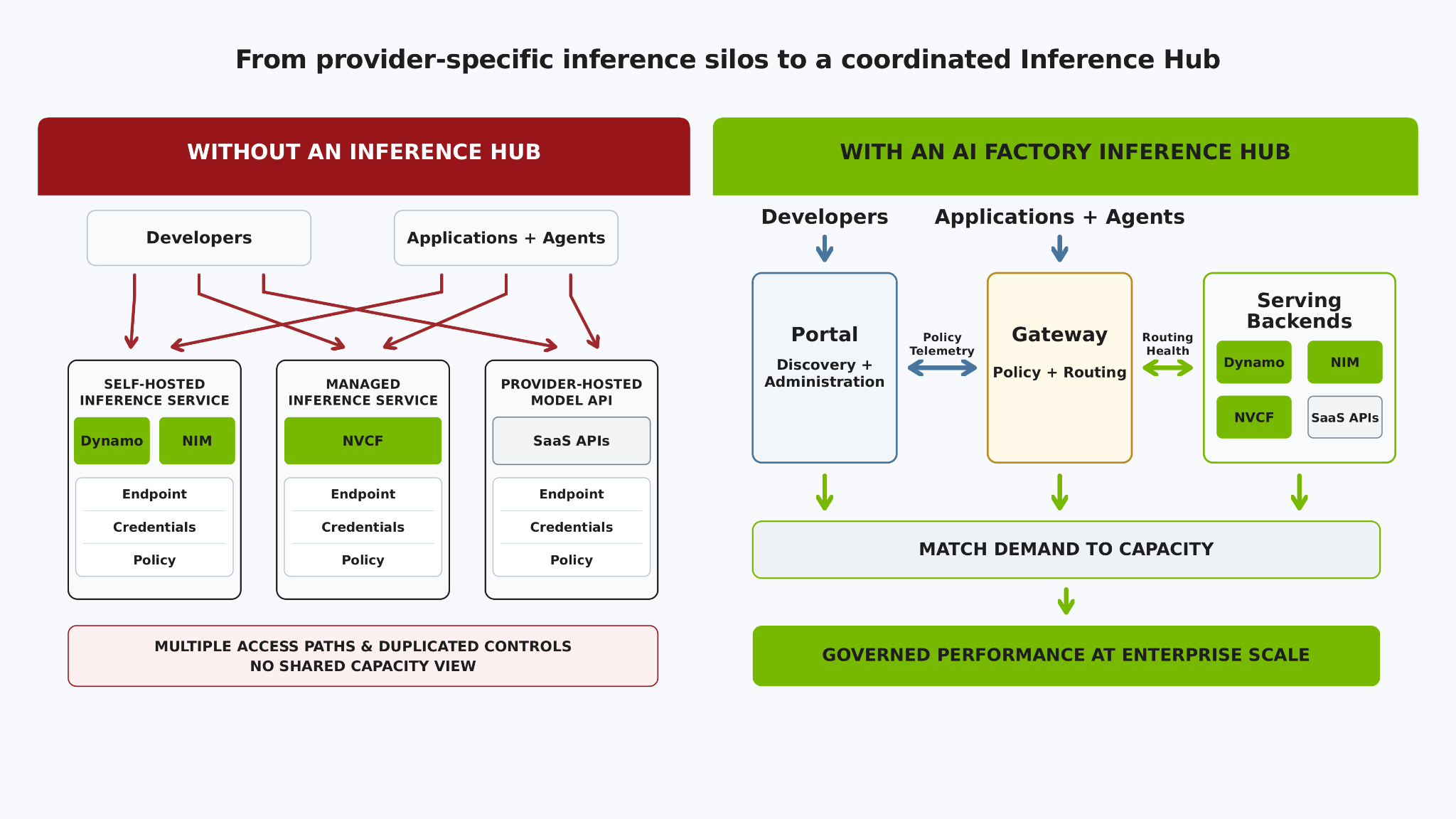
Figure 1 Coordinated inference aligns demand, policy, and backend capacity.#
Drivers and Personas#
The Enterprise AI Factory inference hub serves two role families. Consumers use inference capabilities through governed, documented interfaces. Administrators operate the service, enforce policy, allocate capacity, and manage spend. This separation keeps the document focused on what each group needs.
Role family |
Persona |
Driver |
|---|---|---|
Consumers |
Developers and application teams |
Self-service onboarding, stable APIs, model aliases, examples, and scoped credentials. |
Consumers |
Applications, agents, and users |
Reliable access to approved models with predictable latency, quota, and fallback behavior. |
Administrators |
Platform operators and SRE |
Backend lifecycle, routing, health, utilization, and capacity planning. |
Administrators |
Security and finance |
Revocable credentials, audited enforcement, attribution, forecasting, and budget control. |
Together, these personas explain why the inference hub is more than an API gateway. It must combine access, ownership, policy, capacity, observability, and cost control in one governed operating model.