
Reference Implementations#
This paper uses two reference implementations to make the generic architecture concrete: an upstream open-source stack and a vendor-supported Kubernetes stack. Both must satisfy the same trust boundaries and required capabilities.
Upstream Implementation#
The upstream open-source CoCo reference stack is the NVIDIA Confidential Containers Reference Architecture 1.0.0, the initial GA release (May 2026). It runs GPU-accelerated inference as a Kubernetes pod inside a hardware-measured confidential VM, with a reference stack of upstream OSS components, (excluding the Key Vault component, that required Hardware backed solutions). All the OSS components in the NVIDIA Confidential Containers RA 1.0 are open-source projects maintained under the CNCF Confidential Containers and Kata Containers projects, integrated and validated by NVIDIA.
Note
CC License: NVIDIA’s Confidential Computing solutions (referring to the set of HW, SW capabilities, services and support) are licensed for commercial use. The use of the NVIDIA CC capabilities is free for R&D and proof of concept purposes, but needs a licensed entitlement to use the features for production deployments.
Status: GA 1.0.0. The NVIDIA CoCo Reference Architecture is validated for production use in regulated industries. See the release notes at https://docs.nvidia.com/datacenter/cloud-native/confidential-containers/1.0.0/release-notes.html.
The upstream stack — Kubernetes, Kata Containers, NVIDIA GPU Operator, and the CNCF Trustee project — is one validated implementation of the architecture, not the architecture itself. Any Kubernetes stack that produces the same evidence, enforces the same policy, supports the target GPU confidential-computing mode, and preserves the same trust boundaries satisfies the architecture.
Table 5: Software Components (GA 1.0.0)
Layer |
Component |
Version |
|---|---|---|
Kubernetes |
Any CNCF-conformant distribution |
1.32+ |
Confidential pod runtime |
Kata Containers (via kata-deploy Helm chart) |
3.29 |
Kata lifecycle management |
Kata Lifecycle Manager |
0.1.4 |
GPU Operator |
NVIDIA GPU Operator |
v26.3.1+ |
Node feature labeling |
Node Feature Discovery (NFD) |
v0.6.0 |
Container runtime |
containerd (only supported runtime) |
2.2.2+ |
Hypervisor |
QEMU + Kata-carried patches |
10.1 |
Virtual firmware |
OVMF |
edk2-stable202511 |
Guest OS (Kata VM) |
Distroless (NVIDIA-built hardened image) |
— |
Guest kernel |
Hardened kernel; dm-verity; SEV-SNP / TDX |
6.18.5 |
Host OS |
Ubuntu |
25.10 |
Host kernel |
— |
6.17+ |
Attestation + key release |
KBS protocol (confidential-containers/trustee) |
0.4.0 |
CPU TEE — AMD |
AMD SEV-SNP |
EPYC Genoa (9004) or Milan (7003) |
CPU TEE — Intel |
Intel TDX |
Xeon Emerald Rapids (ER) or Granite Rapids (GR) |
Table 6: Supported GPU Platforms (GA 1.0.0)
GPU |
Passthrough |
CC mode |
|---|---|---|
NVIDIA H100 |
Single-GPU |
on |
NVIDIA H200 |
Single-GPU |
on |
NVIDIA H100 PPCIe |
Multi-GPU (all GPUs to one VM) |
ppcie |
NVIDIA H200 PPCIe |
Multi-GPU (all GPUs to one VM) |
ppcie |
NVIDIA B200 |
Single-GPU and Multi-GPU |
on |
NVIDIA RTX Pro 6000 BSE |
Single-GPU |
on |
All GPUs on a host node must be configured for Confidential Computing; mixed-mode nodes are not supported. MIG and vGPU are not supported in CC mode.
The GPU Operator deploys four node-level components for confidential containers: NVIDIA VFIO Manager (binds GPUs to vfio-pci), NVIDIA Sandbox Device Plugin (advertises nvidia.com/pgpu resources), NVIDIA Confidential Computing Manager (cc-manager, sets CC mode), and NVIDIA Kata Manager (generates CDI specifications for GPU passthrough).
Exact component versions, deployed manifests, node configuration, hardware profile, and support status are part of the validated configuration profile in Appendix A, not the body of this section.
Table 7: NVIDIA CoCo References
Reference |
Use it for |
|---|---|
Architecture diagrams, component roles, GPU Operator, Kata, Trustee |
|
GA status confirmation, key features, limitations |
|
Definitive GPU SKU, CPU, OS, kernel, and component version matrix |
|
Node labeling, GPU Operator ClusterPolicy, RuntimeClass, CC mode management |
|
Trustee provisioning, KBS config, CPU/GPU evidence flow, NVIDIA verifier |
|
AA, CDH, KBS, AS, RVPS, KBS protocol, attestation and resource policies |
Red Hat Implementation#
The Red Hat implementation uses Red Hat OpenShift for the Kubernetes platform, OpenShift sandboxed containers with Kata Containers for the confidential pod sandbox, and Red Hat build of Trustee for attestation and key release. Red Hat OpenShift Sandboxed Containers 1.12 is available as Technology Preview from Red Hat for Confidential GPU features.
The Red Hat-based stack is one validated implementation of the architecture, not the architecture itself. Any Kubernetes stack that produces the same evidence, enforces the same policy, supports the target GPU confidential-computing mode, and preserves the same trust boundaries can play the same architectural role.
Table 8: Red Hat References
Red Hat reference |
Use it for |
|---|---|
Primary Kubernetes Installation |
|
Confidential containers workflow, TEE setup, RuntimeClass, and verification steps. |
|
TrusteeConfig, KBS, RVPS reference values, resource policy, image-signature verification, and deployment topology. |
This figure shows how the generic proprietary models and data deployment on Confidential Containers deployment maps onto the Red Hat Openshift Container Platform reference stack.
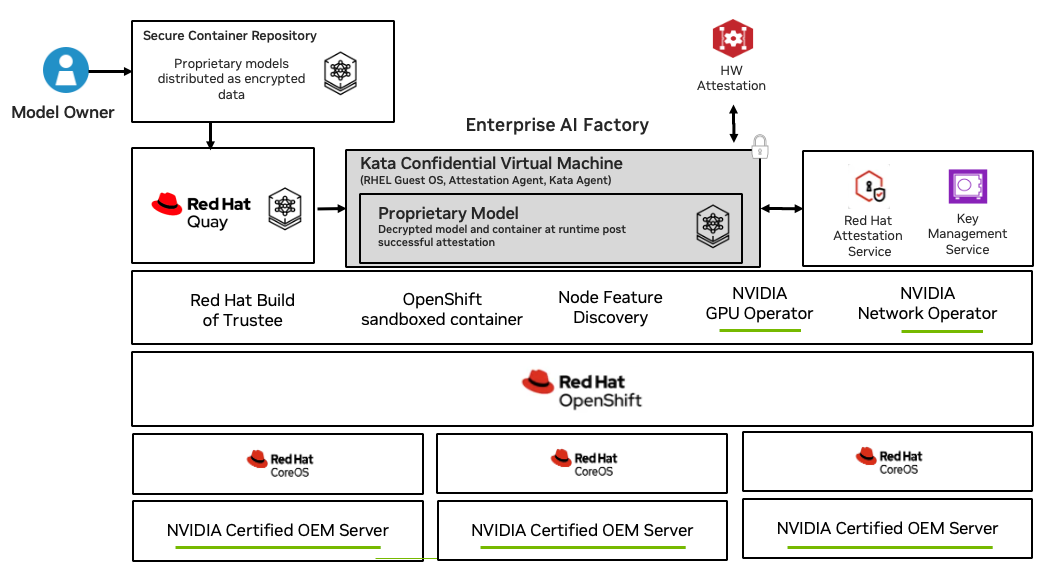
Figure 6 Reference implementation with Red Hat#
Exact component versions, hardware profile, and support status are part of the validation profile.