
Trust & Threat Model#
In practice, the parties don’t need unrestricted review of each other’s proprietary source code before reaching agreement. They agree on signed artifacts, measured builds, allowed network paths, logging rules, attestation evidence, and the key-release policy that ties them all together. High-assurance deployments — especially anywhere code handles customer payloads — may still call for source review, third-party audit, SBOM review, or reproducible-build evidence.
The model provider distributes encrypted model artifacts and defines a policy that allows secure key distribution with successful attestation evidence. A key-management authority implements the policy and releases model keys only to workloads that present valid attestation evidence matching that policy. The enterprise data owner controls which inputs are sent into the attested workload, where outputs are delivered, and how outputs and logs are retained.
Figure 4 maps those responsibilities to administrative domains.
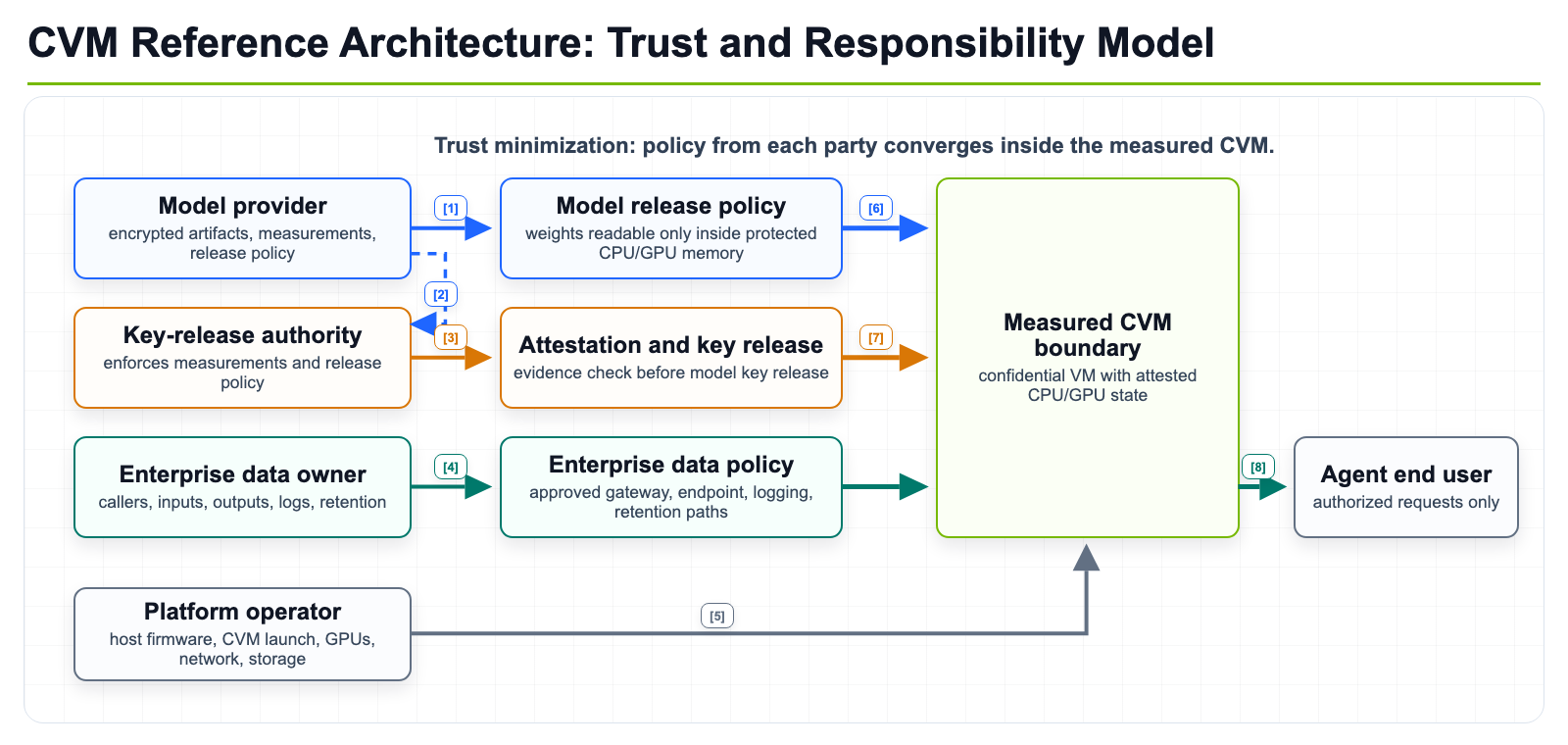
Figure 4 Confidential VM Trust and Responsibility Model#
Table 4: Confidential VM Trust and Responsibility Model
Figure step |
Diagram element |
What it means |
|---|---|---|
1 |
Model release policy |
Model owner defines approved measurements and release conditions. |
2 |
Enterprise data policy |
Enterprise data owner controls callers, input/output paths, egress, logs, and retention. |
3 |
Assurance authority |
Key-release authority owns reference values, collateral, and release audit. |
4 |
CVM platform operation |
OEM or platform operator provides host firmware, KVM/QEMU, OVMF, GPU assignment, and runbooks. |
5 |
Model-key gate |
Model weights become readable only inside the measured confidential workload and protected GPU session. |
6 |
Request path |
Enterprise requests traverse approved gateway, CVM endpoint, and network controls. |
7 |
Assurance gate |
Evidence verification and key release replace direct platform trust. |
The different personas in the end to end deployment are trusted and untrusted with different artifacts in this deployment allowing a clean separation of ownership and access while all personas are outside the trust boundary of the execution environment where the AI model runs and data is provided to it. The following table explains the controls, trust each persona has:
Table 5: Persona Trust and Controls
Party |
Owns or controls |
Trusted for |
Not trusted with |
|---|---|---|---|
Model provider |
Model weights, guest image contents, artifact encryption, model-key release policy |
Defining the approved workload and protecting model IP |
Access to enterprise infrastructure, persistent data stores, or operational logs |
Enterprise data owner |
Data-handling policy, approved users, retention policy, business risk acceptance |
Defining what data may enter the service and what operational data may be logged or retained |
Unencrypted model weights, model keys, or model internals |
Platform operator |
Bare-metal host, firmware rollout, CVM launch environment, networking, storage, monitoring, capacity, incident response |
Availability, correct launch mechanics, and approved platform operation |
Unencrypted model weights, model keys, or decrypted runtime memory |
CC software provider |
Guest image bootstrap, attestation client, measurement tooling, GPU CC enablement, image-build validation tooling, support matrix, failure signals |
Correct confidential-computing implementation, verifiable measurements, patching, and key-release enforcement |
Production model keys unless explicitly operating a trusted key-release service |
Application or agent developer |
Gateway, application logic, user experience, prompt handling, authorization, retention controls |
Implementing application behavior, authorization, and logging under enterprise data policy |
Model-provider keys or unencrypted model weights |
Key-release authority |
Reference values, verifier policy, key-release policy, KMS/HSM configuration |
Correct policy enforcement and audit |
Host or VM administration by default |
End user |
Prompts, files, audio, images, or other inputs |
Supplying authorized inputs to approved application endpoints |
Model internals or administrative control |
What this protects against: a host admin reading guest memory, an attacker pulling unencrypted weights off disk, key extraction from standard VM secret stores, and standard debugging or administrative tools attached to the confidential workload. More broadly, anyone with privileged infrastructure access — host, hypervisor, storage, network, datacenter, support — shouldn’t be able to see model weights, model keys, or decrypted runtime memory through normal platform control.
What it doesn’t: a malicious guest image supplied by the model provider, vulnerable inference code inside the CVM, payload logging by the application itself, a compromised attestation or key-release administrator, side channels, or physical attack. The platform operator stays trusted for availability — they can still power the box off, block the network, or refuse to launch the VM. Confidential computing isn’t a defense against denial of service.