
OAM Operation#
Aerial CUDA-Accelerated RAN Applications#
The Aerial CUDA-Accelerated RAN framework includes three primary applications for end to end L1 implementation and testing.
cuphycontroller is the full L1 stack application. This application implements the adaptation layer from L2 to the cuPHY API, orchestrates the cuPHY API scheduling, and sends/receives O-RAN compliant Fronthaul traffic over the NIC. Several independently configurable adaptation layers from L2 to the cuPHY API are available.
test_mac application, for integration testing, implements a mock L2 that is capable of interfacing with cuphycontroller over the L2/L1 API.
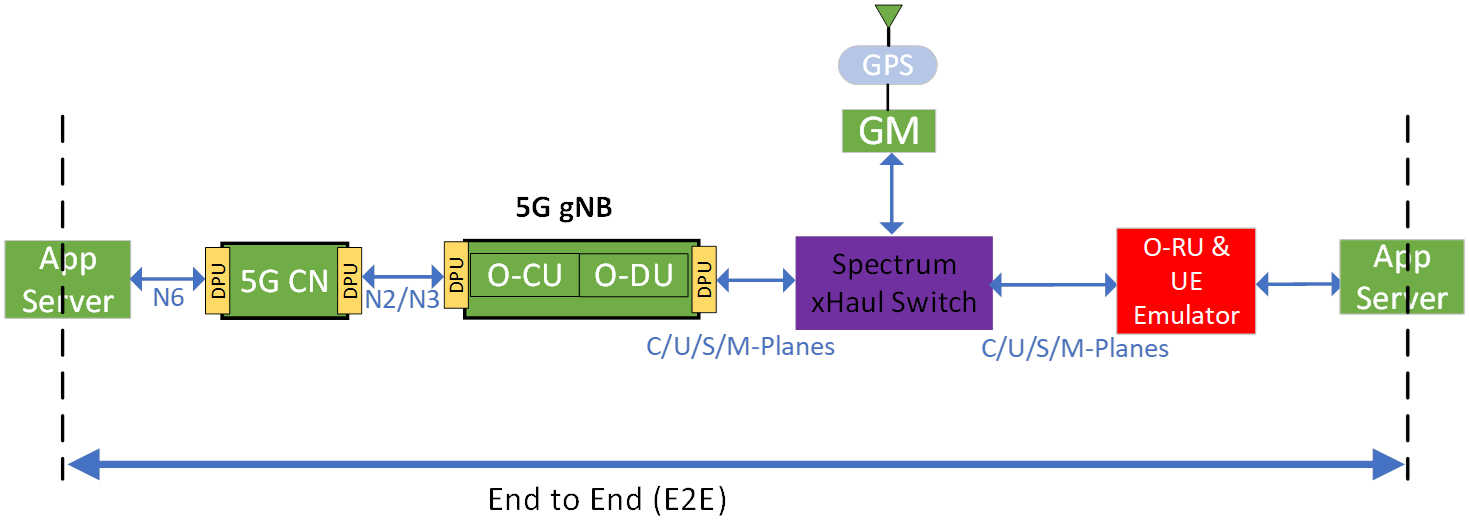
ru-emulator application, for integration testing, implements a mock O-RU + UE that is capable of interfacing with cuphycontroller over the O-RAN compliant Fronthaul interface.
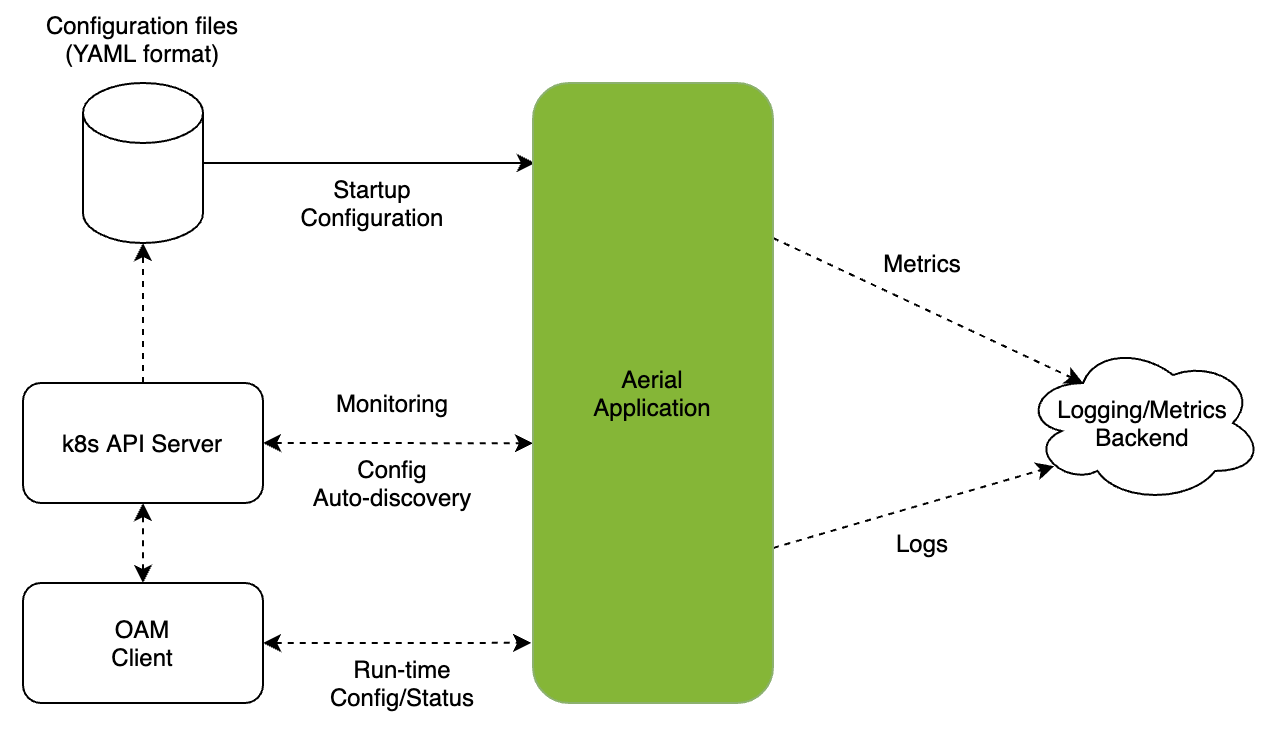
Every Aerial CUDA-Accelerated RAN application supports the following:
Configuration at startup through the use of YAML-format configuration files.
Support for optionally-configured cloud-based logging and metrics backends.
Support for optionally-deployed OAM clients for run-time configuration and status queries.
When deployed as a Kubernetes pod:
Support for application monitoring and configuration auto-discovery through the Kubernetes API.
Configuration YAML files can optionally be mounted as a Kubernetes ConfigMap, separating the container image from the configuration.
Configuration YAML files can optionally be templatized using the Kubernetes kustomization.yaml format,
Test Scenarios#
Functional Testing#
For real-time functional correctness testing, test cases are generated offline in HDF5 binary file format, then played back in real-time through the testMAC and RU Emulator applications. The Aerial cuPHY-CP + cuPHY components under test are run in real-time to exercise the GPU and Fronthaul Network interfaces. Test case sequencing is enabled through configurable launch pattern files read by testMAC and RU Emulator. The diagram below shows an example of downlink functional testing:

The diagram below shows an example of uplink functional testing:

End-to-End Testing#
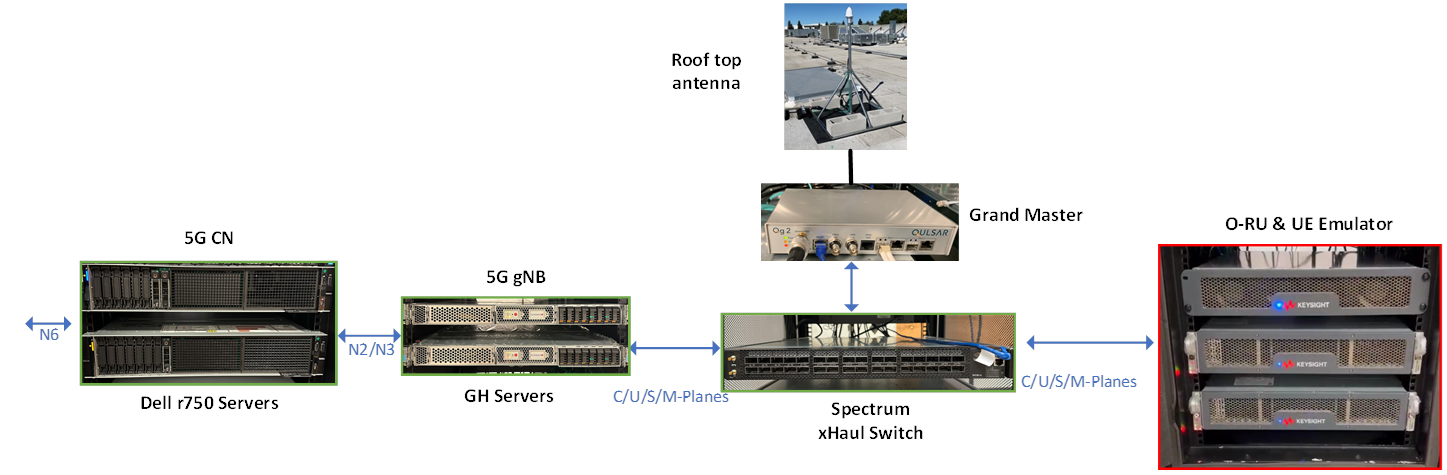
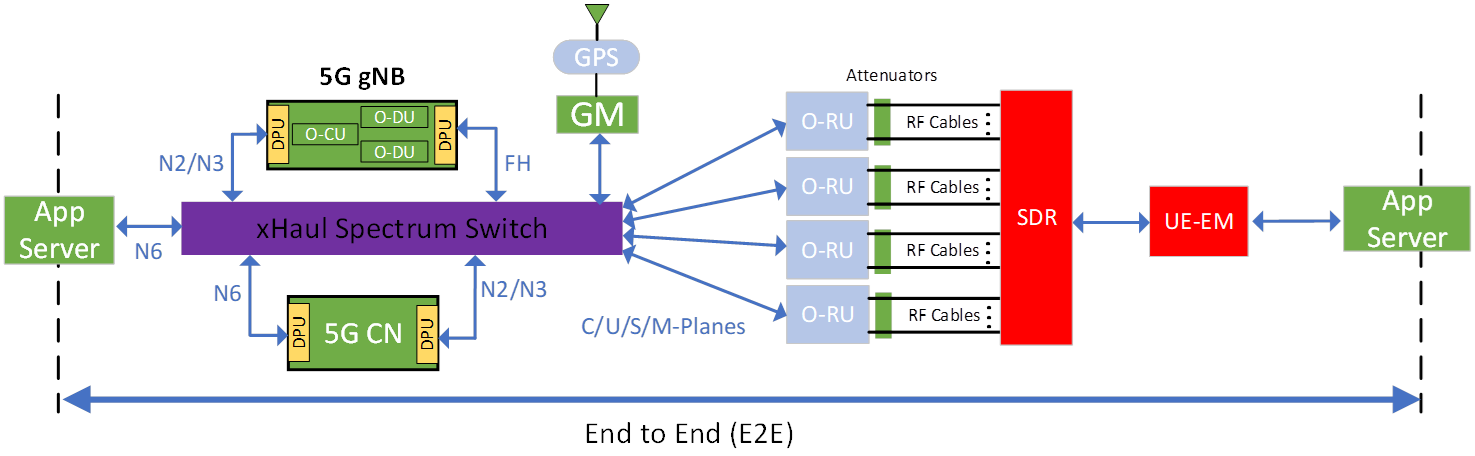
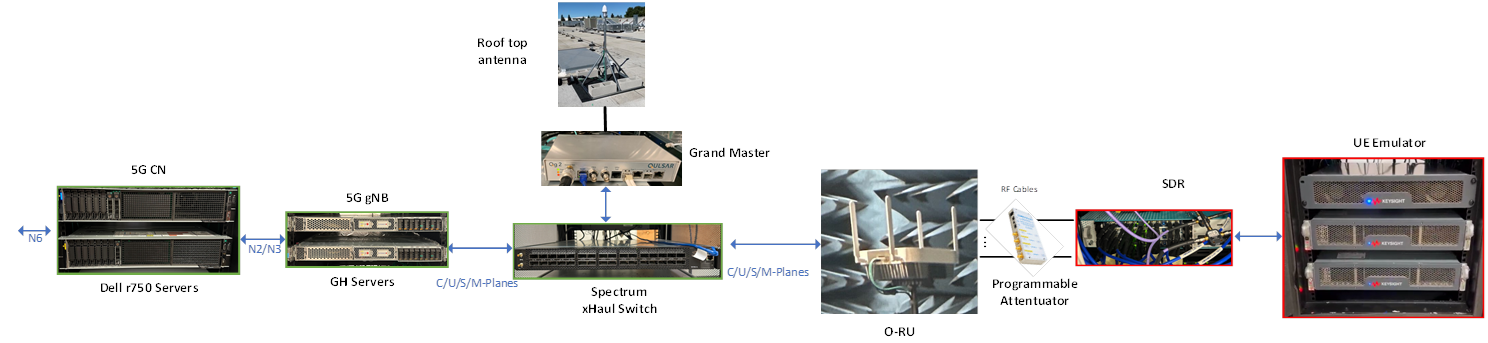
An E2E design methodology is used ensure accurate and comprehensive Aerial validation testing. The methodology begins with a eCPRI setup that is based on the O-RAN FH interface to focus on new feature integration with the ability to scale performance. The next setup includes the O-RU and includes RF cabled interfaces. Lastly, there is an OTA setup where the RF cables in the previous setup have been removed and the antennas have been inserted.
The eCPRI based setup is described below. The first diagram provides a logical representation of the setup while the second shows the actual setup.
The RF-cabled setup is described below. The first diagram provides a logical representation of the setup, while the second shows the actual setup.
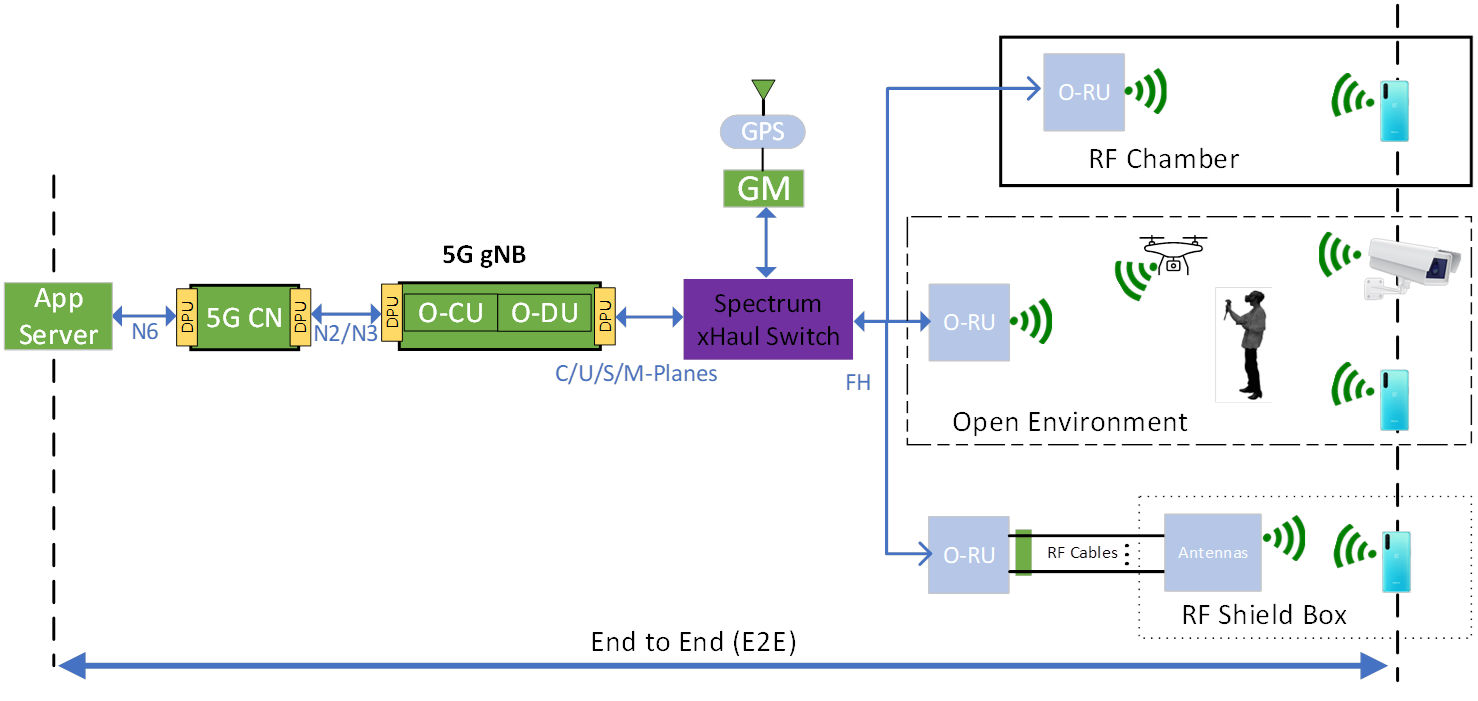
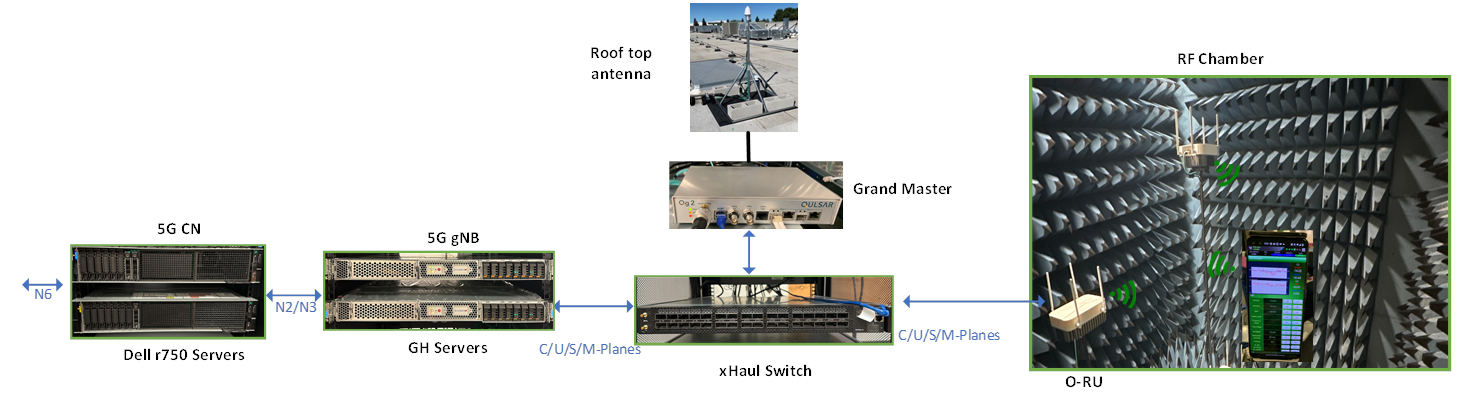
The OTA setup options are described below. The first diagram provides a logical representation of the setup, while the second shows the actual setup.