

Inertial Measurement Unit (IMU)
A ~sensors.Imu models the two quantities produced by a conventional inertial measurement
unit:
sensors.ImuData.ang_vel_b: angular velocity [rad/s] relative to the world, expressed in the IMU frame.sensors.ImuData.lin_acc_b: proper linear acceleration [m/s²], expressed in the IMU frame.
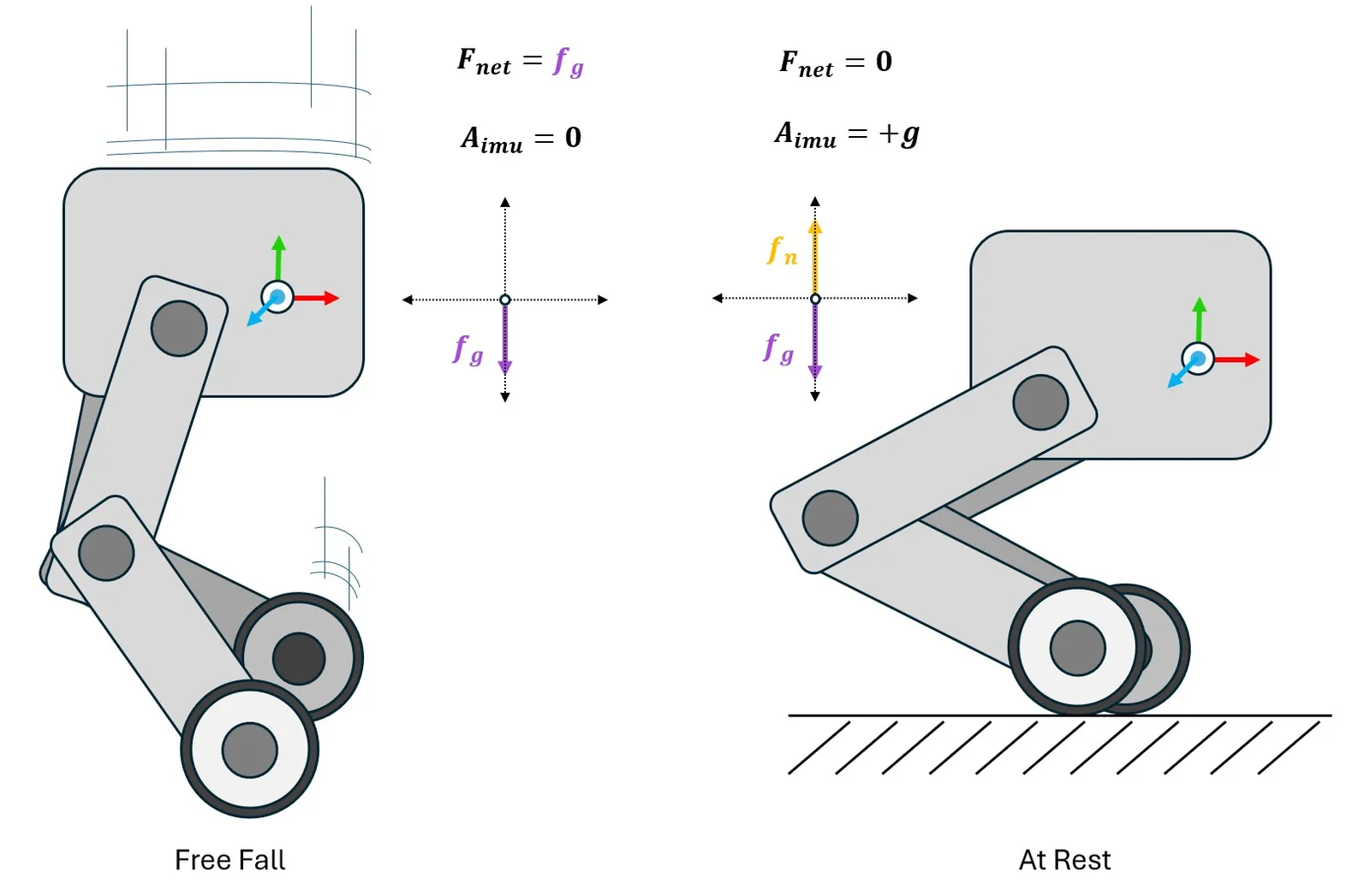
Proper acceleration is what an accelerometer measures. It is zero in free fall and points upward with magnitude for a stationary sensor supported against gravity. This differs from the coordinate acceleration reported by the pva.
Configure the sensor
Attach the sensor to a rigid body or to a fixed child frame beneath one. offset places and
orients the measurement frame relative to the parent frame.
Both data fields are ~isaaclab.utils.warp.ProxyArray buffers. For E environments, their
Torch views have shape (E, 3):
The acceleration estimate depends on consecutive simulation states. Reset the scene and its sensors together so derivative history is not carried across episodes. Use a sensor update period compatible with the control loop that consumes the measurement.
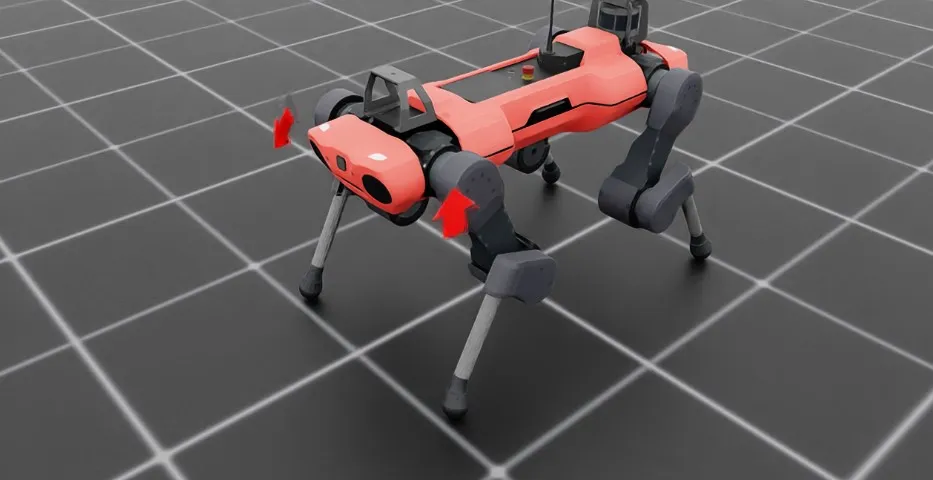
A complete runnable example is available as imu: