

Variant Sets#
What Are Variant Sets?#
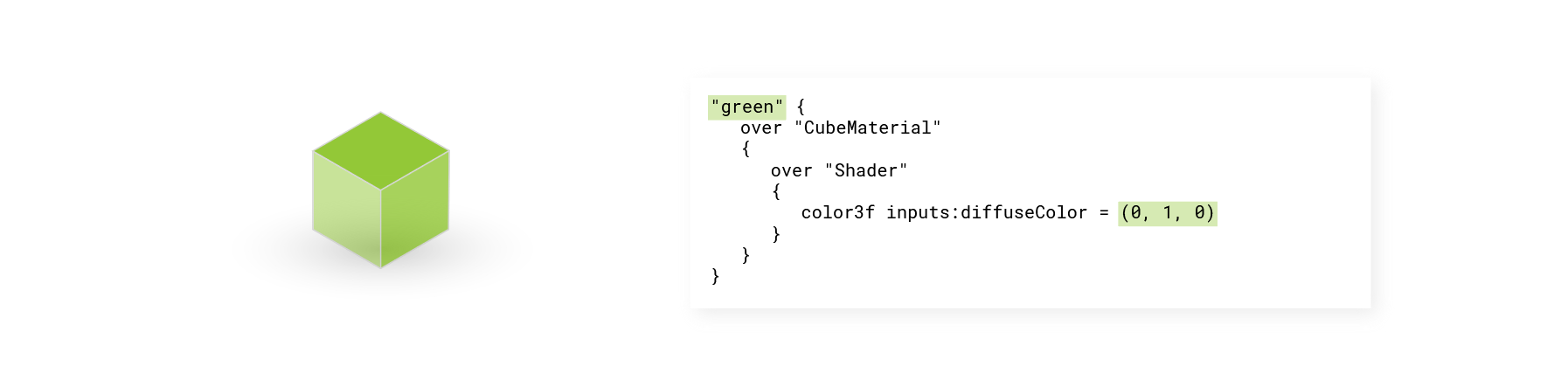

Variant sets allow you to define variations or alternative representations of the same dataset that can be switched at runtime. The most common use case for this is to be able to define a singular asset, while enabling multiple representations of that asset.
For example, a character that has multiple outfits could be authored with a variant set that controls which outfit should be used for a given shot or scenario. This greatly reduces the complexity of managing such a character. Without a mechanism like variant sets, you would need to track the character and the clothing separately, and assemble them on-demand whenever a particular character and outfit combination is needed.
A variant set serves as a controller of variations. We call the variations “variants” in OpenUSD. Only opinions of the selected variant are composed on the stage.
It’s up to the author to decide what “type” of variations a variant set controls. There are no rules for what a variant set can add or modify, but it is helpful to limit the scope of a variant set so that the results are more predictable when users are blindly selecting a variant.
A variant set is added to a prim and its variants can manipulate the prim and any of its descendants. Let’s go through a few things a variant can do within its hierarchy.
Variants can sparsely override properties on the prim or any descendant prim.#
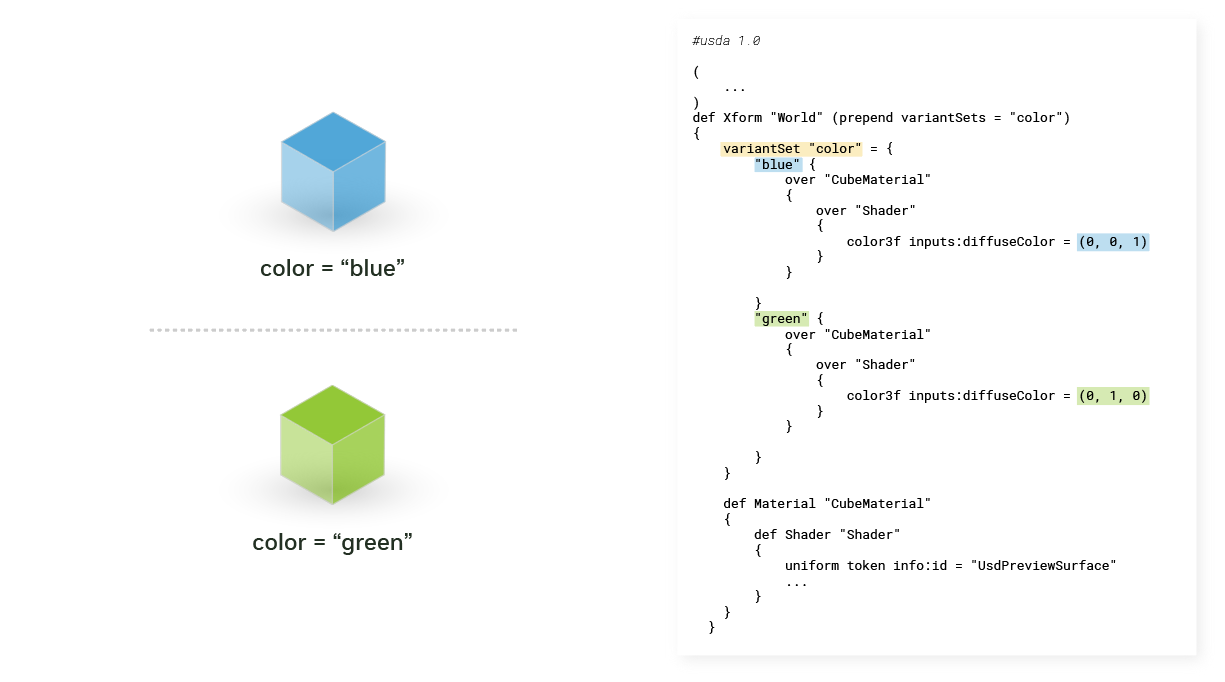
In this example we can see that there are two variants that override the diffuse color of the cube material; one variant is overriding the color to be blue, and the other to green.
Variants can define new descendant prims.#
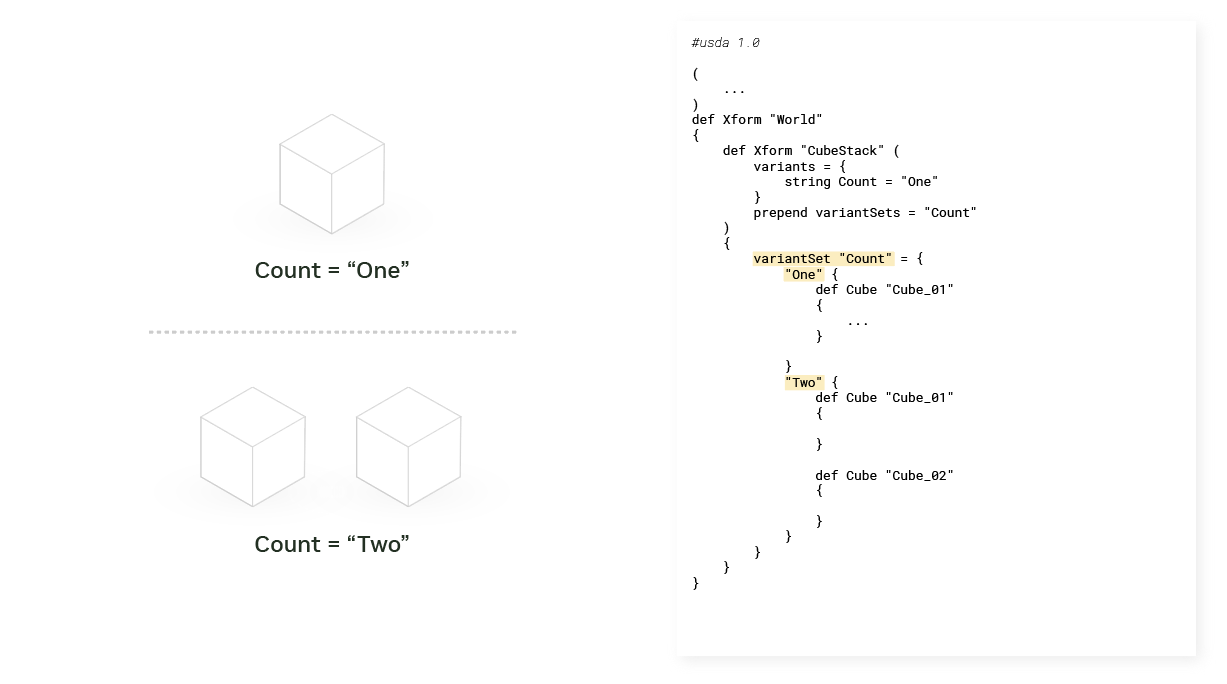
Here we have two variants, where one variant defines one cube and the other defines two cubes.
Variants can be used to author new composition arcs that would only exist within that variant.#
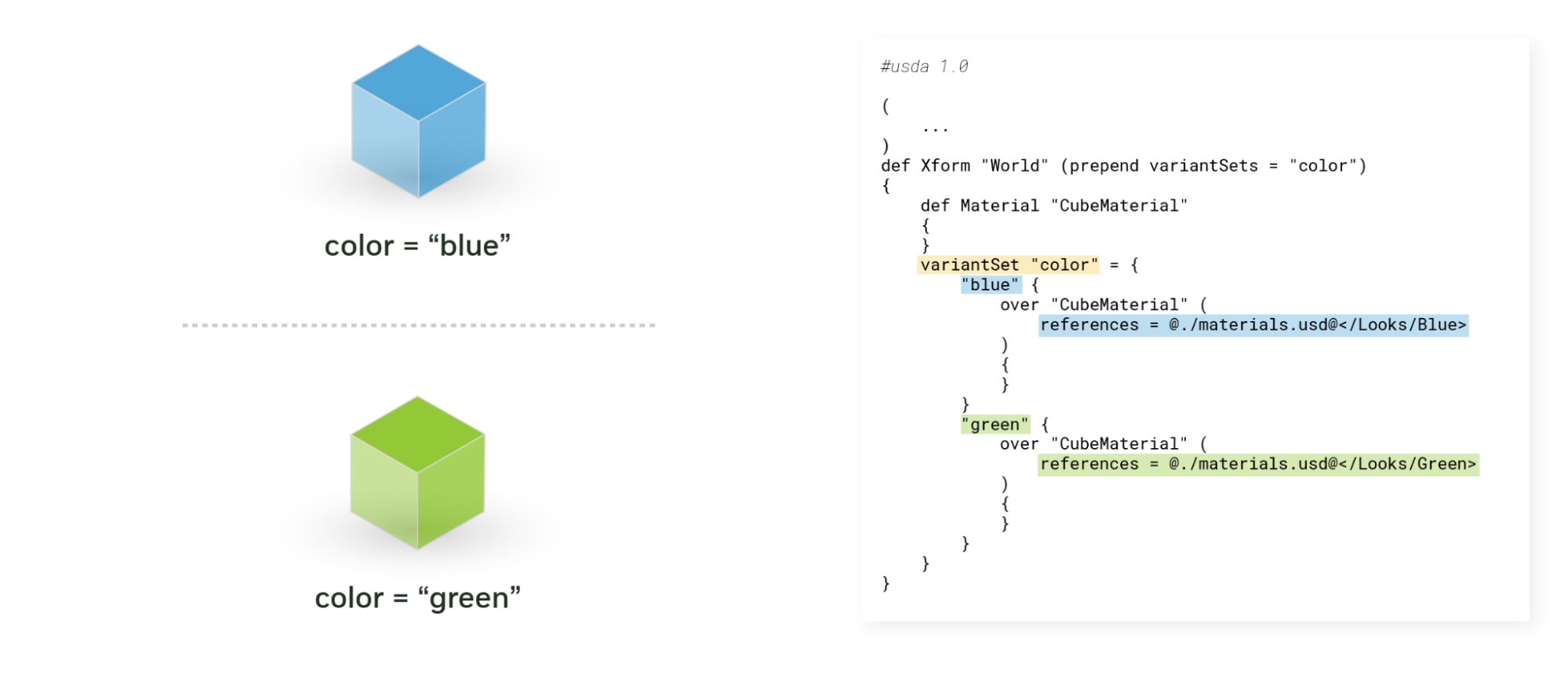
We can author new composition arcs that would only exist in the variant. For example, one variant can reference a blue material from a materials layer, and another variant can reference a green material from the same layer.
When and Why Do You Use Them?#
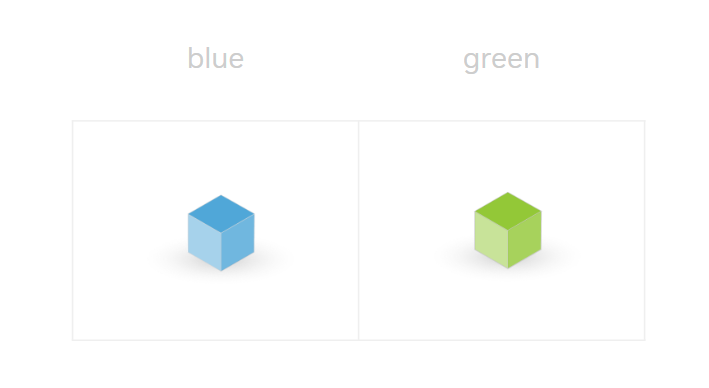
You could author a single variant set on an asset to control a single set of options, like different materials on a cube in the image above.
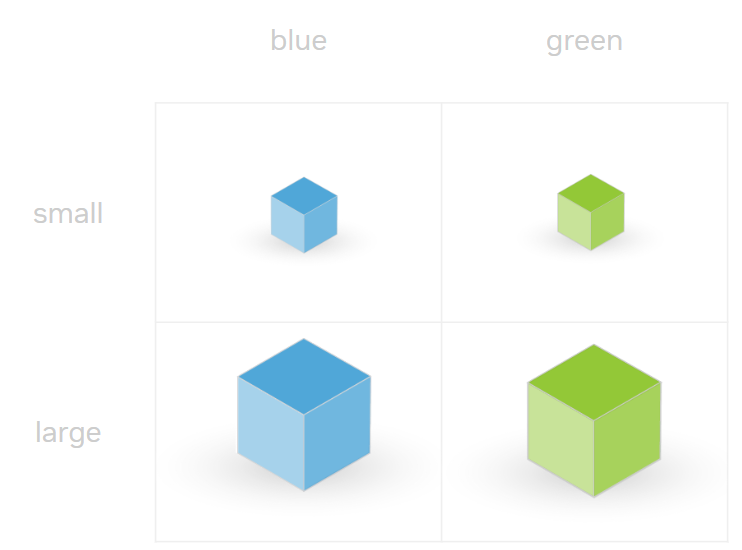
Or, you could create multiple variant sets for different purposes that can be controlled separately to produce many different combinations.
A common pattern is to author geometric and shading variant sets. Geometric variant sets control changes in an asset’s geometry and shading variants control changes in an asset’s materials.
Let’s consider another example. If you wanted to have a character with two geometry options where the character is wearing a “hat” or “no hat” and two material options of “dry” and “wet”, you could produce four different combinations.
Keep in mind that combinations are not “free”. You have to author relevant data for each combination and it is easy to run into two risks:
It’s easy to get carried away with adding too many variant sets and creating variant combinations that will never be used, like a wet character without a hat.
You may choose to not author data for all combinations, but that can create bad UX when end-users try to use a non-functional combination.
Considerations for Variant Design#
When designing variant sets, it’s helpful to understand the performance characteristics of different kinds of variations. Not all variant switches are equal in terms of computational cost. If you are looking to maitain real-time performance when switching variants, this is an important design decision.
Lightweight Variant Switches#
Some variant operations are relatively fast because they only affect value resolution. These include:
Changing attribute values - For example, switching a color from red to blue, or changing a numeric parameter
Changing visibility - Hiding or showing geometry without affecting composition
These operations are lightweight because USD doesn’t need to rebuild the composed scene structure. The stage’s composition index remains the same, and only the final resolved values change. Think of this as changing the settings on existing scene elements.
Heavyweight Variant Switches#
Other variant operations require more computational work because they change the composition structure itself:
Changing reference paths - Swapping which layer files are brought into the scene
Changing activation opinions - Activating or deactivating prims, which affects what gets composed
These operations are more expensive because USD needs to rebuild parts of its composition index. When a variant changes what gets referenced or which prims are active, USD must recompute the composed scene structure, not just resolve different values.
Understanding this distinction can help you design more efficient variant sets. For example, if you need users to frequently toggle between options, consider using attribute overrides or visibility changes when possible. Reserve structural changes (like swapping references or changing activation) for less frequent switches or when the flexibility is worth the additional cost.
Note
The difference between visibility and activation illustrates this well: visibility is purely a rendering concept that doesn’t affect composition, while activation determines whether prims are composed onto the stage at all. This is why changing visibility is faster than changing activation when switching variants.